From flight simulators and $25 guitars to the Phenom 300 and AI.
The short version
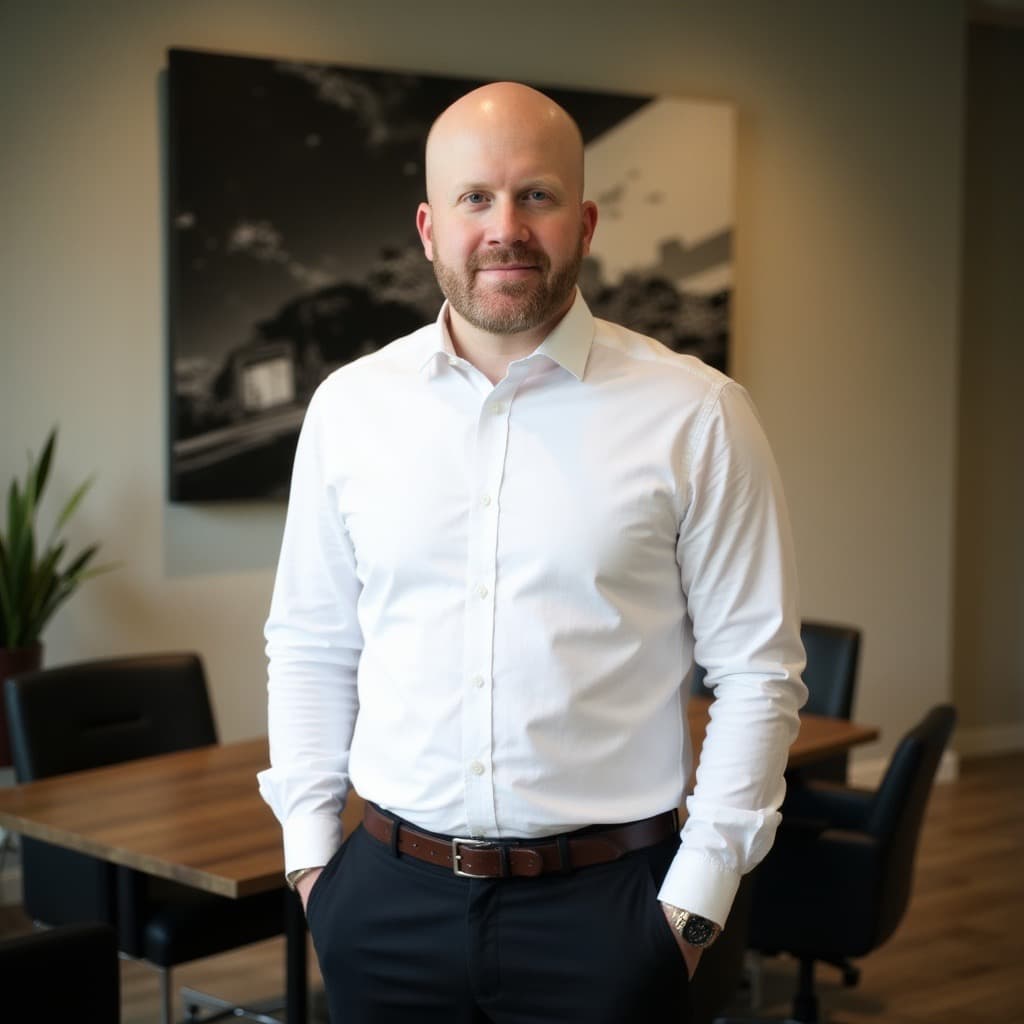
I grew up obsessed with airplanes, got pulled into a decades-long career in the music industry, and then, in my 40s, walked away from it all to become a professional pilot. Today I run Roxstar Labs — an AI consulting and product studio helping small and mid-sized businesses optimize their operations, cut waste, and build systems that actually scale. I've spent years in cockpits making high-stakes decisions, and that operational mindset drives everything I build. My job in every chapter has been the same: take something complex, messy, or chaotic — and make it work.
Early love for aviation
As a kid in Pittsburgh, I was the one printing out thick flight simulator manuals on a dot-matrix printer and stuffing them into binders. I learned what a VOR was before I learned how to drive. I'd sit at the airport for hours just watching airplanes taxi, depart, and arrive, trying to piece together how it all worked behind the scenes.
The dream was to fly, but at the time, formal training felt completely out of reach financially. So aviation went on the shelf — not forgotten, just waiting.
The $25 guitar and 27 years in music
One day on a paper route, I saw a beat-up guitar at a yard sale for $25. That guitar changed the next three decades of my life.
I started as a player, which led to cruise ship gigs, club dates, and eventually a move to Nashville. Over time I shifted from stage to strategy — tour management, artist management, label work, and eventually running teams and companies behind platinum-selling artists.
The music industry is glamorous on the surface and brutally operational underneath. Tours, album cycles, TV appearances, sponsorships — they only work if logistics, communication, and finances are tight. My role kept evolving toward the same spot: be the person who sees the whole chessboard and keeps the machine moving.
The flight that changed everything
Years into my music career, a friend invited me out to the hangar for what sounded like a simple favor: “Come out, we'll take a quick flight.”
I turned my BlackBerry off, climbed into a small airplane, and spent about an hour just flying. No conference calls, no venue issues, no last-minute crises.
When we landed and I turned my phone back on, it lit up with dozens of emails and voicemails. My first thought wasn't, “I'm behind.” It was, I didn't think about any of this once while I was in the air.
That flight pulled the original dream off the shelf. I knew I had to find a way to make aviation more than a hobby.
Starting over as a pilot
During the COVID shutdown, while live events were dead quiet, I decided to stop talking about “someday” and start training seriously. I finished ratings, flew any safe opportunity I could find to build experience, and slowly shifted my identity from “music executive who flies” to “pilot who used to be in music.”
It wasn't glamorous. It was a lot of early mornings, late nights, study sessions, and flights that didn't show up on social media. But layer by layer, the hours, experience, and confidence added up.
Years in the cockpit
I've flown everything from single-engine trainers to the Embraer Phenom 300 in Part 91 operations, carrying executives and teams across North America. I've spent years making real decisions in real time with real consequences — weather, schedules, passengers, crew.
That matters because everything I build and advise on through Roxstar Labs — whether it's software features, AI workflows, or consulting recommendations — comes from the perspective of someone who's operated in high-stakes, real-world environments. I don't just theorize about complex operations. I've lived them.
Why AI and business optimization now
Across every industry I've worked in — music, aviation, and now tech — I kept seeing the same patterns:
- Brilliant people stuck doing low-value, repetitive work
- Critical information trapped in email, text threads, or one person's memory
- Teams wanting to modernize but overwhelmed by where to start
- Small businesses and rural communities falling further behind the tech curve — not because they lack ambition, but because nobody's met them where they are
AI and automation tools were exploding — and most people were only using them as “a better Google.” Meanwhile, the real opportunity was in rewiring how businesses actually operate: their workflows, their decisions, their data, their customer experience.
That's what Roxstar Labs is. It's the company I built to help businesses — especially small and mid-sized ones — use AI to remove friction, make better decisions, and free up humans to do the work only humans can do. I build the tools, design the systems, and walk alongside teams as they make the shift.
Want to work together?
If you're running a business that's ready to modernize — whether that means AI, better workflows, or just an honest outside perspective — I'd be glad to talk.
Explore consulting options